
Share William F. Brace's obituary with others.
Invite friends and family to read the obituary and add memories.
Stay updated
We'll notify you when service details or new memories are added.
You're now following this obituary
We'll email you when there are updates.
Select your format and elements to print

IN LOVING MEMORY OF William F. Brace
William F.
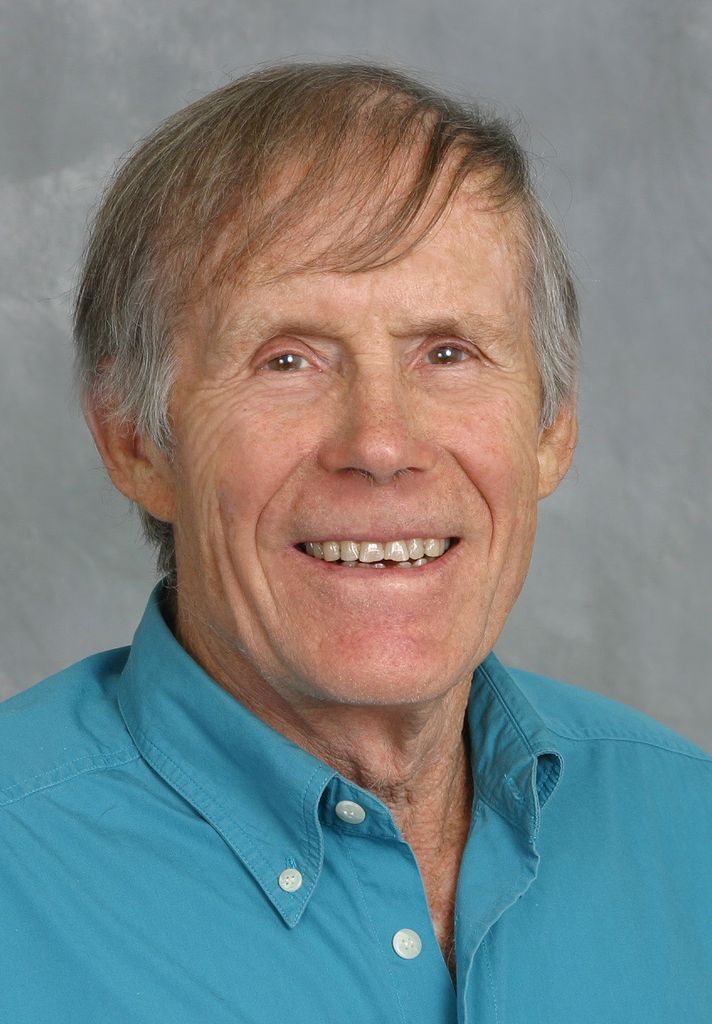
Brace
Aug 26, 1926 — May 2, 2012
William F. Brace's Obituary
William F. Brace, former head of the Department of Earth, Atmospheric and Planetary Sciences at MIT died on May 2, 2012 from complications following heart surgery. He was 85. His fame in technical circles rests on his pioneering work on rocks found at the earth's crust, the crust being measured from the surface to depths of some fifteen miles. These experiments were the first studies of rock under various pressures and temperatures. They had immense practical interest to problems faced by engineers and scientists: how to design safer mines? The mechanics of fracking; how and why do mountains form? Why do earthquakes occur? Seismologists had been studying earthquake waves for years, but had no information of the source of the waves. His experiments, simple as they were, are, after forty years, still the basis of what we know about earthquakes. Predicting them remains elusive. His first MIT degree was in Naval Architecture. Upon graduating in 1946, as an Ensign in the U. S. Navy, he was sent on the Bikini Atoll for "operation crossroads" a series of nuclear tests. Despite claims they were safe, there was shockingly little protection for the crew. Many died in later years from radiation sickness, which Bill felt fortunate to have escaped. The Russians pressed on to make their own bombs, the arms race began, and lovely Paradise of Bikini symbolizes the Dawn of the Nuclear age. The Swim Suit? A French fashion designer compared the splitting of the atom, with splitting of the one-piece bathing suit! Bill tried to enter the permanent Navy, but was turned down by his flat feet! Bill returned to MIT, got a degree in Mechanical engineering, then a PhD in geology. He dressed in a kilt, met his future wife at a Scottish country-dance. He was to defend his thesis the next day. She with a Scottish name, Grant, was out to learn Scottish Dancing. The next time they met was at the top or the headwall on Mt. Washington. She waved him to go down first, studied the terrifying steepness of the slope, prudently took off her skis, and trudged down on foot. They were married in 1955, settled in Cambridge, moved to Concord with their three children in 1978. They have kept up their interest in all kinds of dance, especially English Country Dancing, with it's elegant patterns and lovely melodies, and they both still relish long, snowy winters with great skiing at Carlisle's Great Brook Farm. Bill was chairman of the Department of Earth, Atmospheric and Planetary Science at MIT from 1981 – 1988. He broadened the department by appointing ten faculty, including three women. He introduced a free Thursday lunch! Which lured most everyone to attend. Each week, a scientist would describe his latest project, which often fosters new collaborative research. He also initiated bike rides, picnics to foster sociability and camaraderie in a building eighteen stories tall! He received many scientific honors including the election to the National Academy of Science and the American Academy of Arts and Science, both in 1971; The Bucher Medal in 1987 from the American Geophysical Union. From 1976 to 1988, he was the green Professor of Geology. He was also a Fulbright Scholar in Innsbruck, and a Guggenheim Scholar in Vienna to study alpine geology. He wrote over one hundred scientific papers many cited over 700 times, several as recently as 2006. His enormous influence is still felt. When he retired from MIT, he re-invented himself as a cabinetmaker. He built a workshop resembling a small barn. A friend, Grant Bowry wrote: " A production woodworking shop would have been proud to have the equipment that Bill assembled. I don't know any person who was as thorough in his workmanship in producing his spectacular furniture". Bill used his skills learned as a Naval architect and mechanical engineer, along with his own sense of artistic design, to create furniture that really was spectacular. He made bow beds, bunk beds, cradles and cribs. He made display cabinets, hutches, cabinets for record players and records (now obsolete). He made grandfather clocks, mantle clocks, school clocks. He made high kitchen stools, standing desks, footlockers. He made rocking horses, jewelry boxes, earring stands. and tables of all kinds; coffee tables, bedside tables, office tables, corner tables, kitchen tables, dining room tables with leaves, sideboard tables, and entrance hall tables. He worked mainly in cherry, oak, black walnut, ash, carefully avoiding rare tropical woods. In all he created well over a hundred pieces of one-of-a-kind: elegant, yet practical and creativity including some from Fine Woodworking magazine. Bill loved music and music making. With his wife he sang for many years with Boston's Chorus Pro Musica under Bud Patterson, sang the great Oratorios and Passions with the Boston Symphony Orchestra under Charles Munch. He learned to play the recorder, moved on to the oboe played in local community orchestras. He loved to sail. His yacht was a twelve-foot Klepper foldboat with mainsail, jib, outriggers and oars! He would launch his little craft into Walden Pond, Ipswich Bay and the Bay of Fundy with it's thick fogs and thirty-foot tides! He was a fine athlete. He rode on the Charles from the Cambridge Boat Club. He was one of the founders of the Charles Head-of-the-Charles Regatta, set up the course on the winding river. The course is still used almost fifty years later. He won some twenty races, rowing in crew, singles and pairs with his partner Ben Jones. He ran over thirty marathons, and he trained himself to run "Ultra Marathons", running fifty miles on the flat feet rejected by the Navy! He was an avid birdwatcher, spending many a springtime in Mt. Auburn Cemetery catching the migrating songbirds, and he prowled the coast for shorebirds. An English watercolor painter, Tony Foster, who specializes in the world's wild places, arrived in Concord in the early 1980's to paint "Thoreau Country". Bill was intrigued, and it gave him the perfect excuse to be in the backcountry, Tony writes; "from him I learned the skills of backcountry travel, which I believe he had no equal. He was expedition quartermaster par excellence". Bill traveled with Tony, and sometimes with his wife and children, for over twenty-five years. They traveled the Sierra Nevada, Yellowstone, the Cascades, Death Valley, the Grand Canyon, and the southwest deserts. Bill also organized other wilderness trips with family and friends. He especially loved the Grand Canyon, where they hiked for days on trails far from tourist routes. A few of the Concord Runners, many of whom had never slept on the ground or backpacked persuaded him to lead them on ten such trips. "You couldn't go wrong if you just duplicated what he did", said Bob Armstrong. "If he put up his tent, you should too". Andre Mallegol wrote, "Bill had a very low-key leadership style, but his suggestions made sense". Bill kept himself physically fit. In February of this year, he was skiing on Mt. Rainier. In March he was hiking the Mt. Wachusett trails. In April he was canoeing the Concord River. He leaves his wife and best friend of fifty-seven years Peggy (Grant) Brace and their 3 children: Colin of Amsterdam; Nathaniel and his wife Karen and 2 children, Clark and Colin of Seattle; and Sarah and her husband Stokley Towles and 2 children, Schuyler and Lavinia of Seattle. Included are his neighborhood "adopted grandchildren": Emily, Charlotte and Nicholas Higgins. He adored those grandchildren, and they all adored him. They called him "Opa", German/Dutch for grandfather. Soon, young and old were calling him "Opa". Fortunately for Bill, he never suffered the limitations and indignities of extreme old age. All his long life he radiated happiness, and he was the best of company. He will be vastly missed by all who knew him. A celebration of his life will be held on Tuesday, June 12th at 11 AM in the First Parish Unitarian Church in Concord Center. Arrangements are under the care of Charles W. Dee, Jr. and Susan M. Dee, Directors, Dee Funeral Home of Concord. To share a memory in Bill's guest book, visit www.deefuneralhome.com.
To send flowers with our preferred florist or plant a memorial tree, please visit our flower store.
William F. Brace's Guestbook
Visits: 33
This site is protected by reCAPTCHA and the
Google Privacy Policy and Terms of Service apply.
Service map data © OpenStreetMap contributors