
Share Dennis J. Picard's obituary with others.
Invite friends and family to read the obituary and add memories.
Stay updated
We'll notify you when service details or new memories are added.
You're now following this obituary
We'll email you when there are updates.
Select your format and elements to print

IN LOVING MEMORY OF Dennis J. Picard
Dennis J.
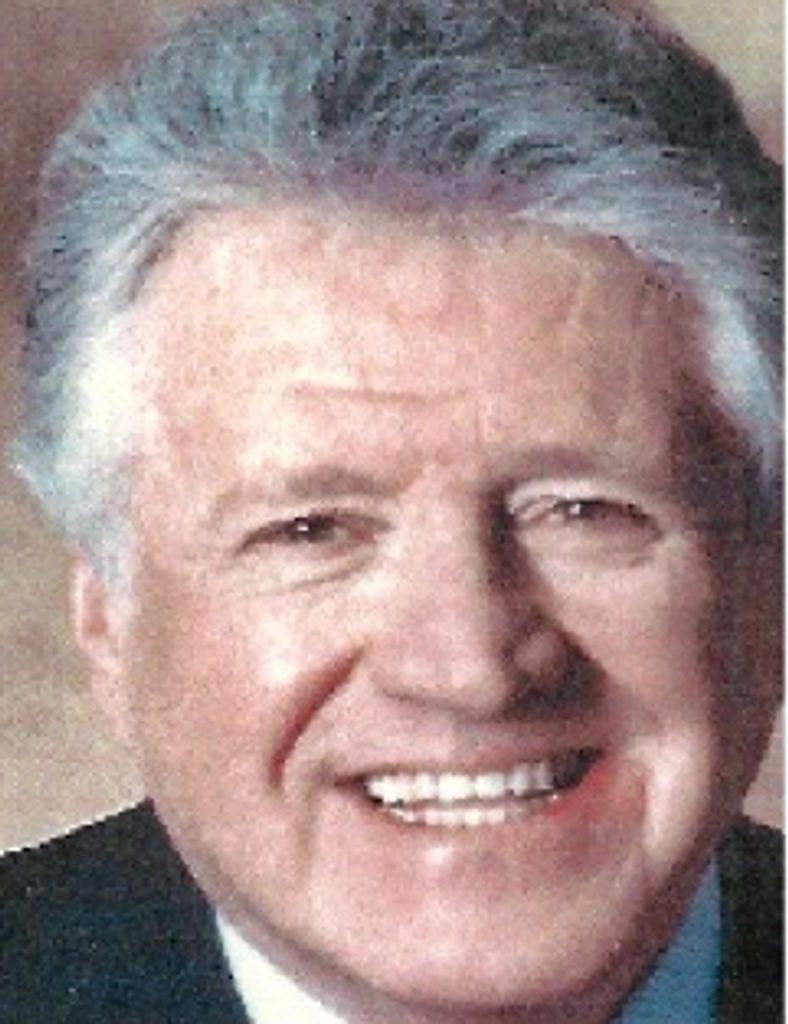
Picard
Aug 25, 1932 — Oct 21, 2019
Dennis J. Picard's Obituary
Dennis J. Picard, Raytheon Company Chairman and CEO and Chairman Emeritus, at age 87.
Dennis J. Picard, a defense industry legend and leader, who rose through his company's ranks to transform Raytheon Company into one of the largest military suppliers in history, passed away on the 21st of October 2019 in Concord, MA. He was the beloved husband of Dolores (Petit) Picard, loving father of their five children and was the son of the late Joseph and Louise Picard of North Providence, RI.
Picard, whose career with the defense and electronics industry giant covered a forty-four year span from the early days of the growth of electronics, radar and guided missile technologies, through the first Gulf War and then through the subsequent wrenching consolidations of the defense industry, was a dedicated and widely respected engineer and business leader, and one not shy in dealing with comment and controversy.
In the early 1990's, the Pentagon pushed the defense industry to consolidate, and Picard, having put in place a very strong management team, was determined not to have Raytheon acquired by any larger defense company. During the next several years, Raytheon moved quickly to acquire Texas-based E-Systems, Texas Instruments Defense and Chrysler Defense, culminating these efforts with the acquisition of highly regarded Hughes Defense.
Criticized in some quarters as having put the Company at risk due to the debt created by these major acquisitions, Picard insisted that the resulting increase in profitability and program diversity that would result would allow debt to be paid down and that Raytheon would both prosper and become a much larger and respected defense company. That vision became reality as Raytheon became the world's largest supplier of tactical missiles, with sales increasing from under $10 Billion to over $20 Billion.
The challenges of integrating these newly acquired and diverse businesses into Raytheon's management systems and routines occupied a substantial amount of his efforts, causing him to remain in office as Chairman until 1999, two years beyond normal retirement age. He retired as Chairman in July, 1999 and remained on the Company's Board of Directors until July, 2000.
Interestingly, when he was at Hughes Defense operations in Los Angeles for the first time, he received a briefing on advanced airborne radar technologies. Picard was so impressed with the briefing and the briefer that he turned to an associate and said, "that man is certainly going to go far in this company." That man was Tom Kennedy who later became Raytheon's CEO and Chairman in 2014.
In the mid 1990s, Picard had become highly concerned about the flight of manufacturing companies from and the loss of jobs in Massachusetts, due largely to burdensome taxes specifically affecting the manufacturing industries. He spearheaded an alliance of corporate, labor, academic and political leaders which eventually succeeded in passing legislation establishing a new basis for taxation of manufacturing in the Commonwealth.
Picard was very highly regarded in engineering circles for his knowledge and expertise in the design of large strategic radars, missile guidance systems and ballistic missile defense. Within the defense industry he was very well known as a demanding manager, a persistent and implacable competitor and for his ability to assemble and lead outstanding teams of engineering and technical professionals and business managers.
Picard was born in North Providence, RI, on August 25, 1932, and was a graduate of LaSalle Academy. After service with the Air Force in the US and overseas during the Korean War, he attended RCA Institute in New York and graduated as a licensed broadcast engineer, later opening a TV repair business in the basement of his parents' RI home.
Picard began his career as an engineering assistant at Raytheon's Waltham, MA operation in 1955, after famously becoming lost en route to a scheduled interview at GTE's Waltham plant and coming across a Raytheon hiring center instead. He concurrently completed degrees in Electrical Engineering and Management at Northeastern University, graduating Cum Laude in 1961. He continued a rapid rise through the company's engineering ranks and into program and general management at Raytheon's Equipment Division, eventually becoming its Assistant General Manager.
He was tapped in 1983 to take over Raytheon's Missile Systems Division, the company's largest, at a time when Raytheon's most important program, the Patriot Missile System, was experiencing major engineering and production problems and was at risk of being cancelled. Having rapidly assembled a talented and highly motivated technical and manufacturing team, he led the resolution of the problems hindering the system, culminating this effort with dramatic and successful simultaneous intercepts of four targets by four missiles in final testing by the US Army, thereby ensuring that Patriot's deployment would move ahead as planned. Many technical and financial analysts credited his saving of the bedrock Patriot program as tantamount to saving Raytheon itself and its future. Picard subsequently grew the division significantly by adding key programs such as the AMRAAM, Maverick and Standard missiles, among others, to the division's manufacturing portfolio. Many of these programs have continued to evolve substantially since that time and continue today as bulwarks of Raytheon's sales to US and foreign militaries.
Having a strongly held opinion that he would not join any organization unless he felt he could make a substantial contribution to its deliberations and success, he was a director of State Street Boston Corporation, a member of the National Academy of Engineering, President and an Honorary Fellow of the American Institute of Aeronautics and Astronautics, and a Life Fellow of the Institute of Electrical and Electronic Engineers, having been cited by IEEE for his "leadership in the development and implementation of large phased array radars."
He was a registered professional engineer and held honorary doctorates from Northeastern University, Merrimack College and Bentley University. Picard was also trustee emeritus of Northeastern University and a past trustee of Bentley University, a past director of the Discovery Museums of Acton, MA, and a past member of the Advisory Committee of the American Red Cross. He was also a member of the Business Council and the National Business Roundtable, a former member of the Defense Policy Advisory Committee on Trade, the President's National Security Telecommunications Advisory Committee, and the President's Export Council.
In 1991, he was inducted into the U.S. Army's Order of Santa Barbara, and in 1996, he received the National Security Industrial Association's Environmental Achievement Award.
In March 1997, Picard was honored by the Navy League of the United States with the Fleet Admiral Chester W. Nimitz Award "for outstanding contributions to the United States' Maritime Strength," and in May 1997, was honored with the Intrepid Museum Foundation's "Intrepid Salute Award" for his "support of the men and women of America's armed forces." In September 1997, he received the John R. Allison Award from the U.S. Air Force Association, and in October 1997, the Association of the U.S. Army awarded him its John W. Dixon medal.
During 1997, he was also named "New Englander of the Year" by the New England Council, and received the Ralph Lowell Distinguished Citizen Award from the Boston Minuteman Council of the Boy Scouts of America.
In April 1998, he received the Industrial Leadership Award from the National Defense Industrial Association, and was the recipient of the Semper Fidelis Award of the Marine Corps Scholarship Foundation. In November 1998, the Navy League – New York Council – awarded him with its Rear Admiral John J. Bergen Leadership Medal for Industry.
Picard was also an avid fisherman and boater, sailing out of Harwich Port on Cape Cod where he was an active member and past board member of the Allen Harbor Yacht Club. He likewise loved skiing, hockey, the Boston Bruins, and The New England Patriots, and spending time with his children and grandchildren, for whom, and for his many friends, he was always a much-appreciated problem solver.
He married Dolores M. (Petit) Picard in 1953. He leaves his wife and five children: Dennis J. Picard, Jr. and his wife, Joan; Mary Doherty and her husband, Dennis; Ken Picard and his partner Colleen; Sharon Ayoob and her husband, Mitchell; and Linda Jones and her husband, Keith; along with eight grandchildren: Nicole Doherty Bursae and her husband, Shane; Mary Christina Doherty, and her husband Jonathan and Nathan Doherty, Andrew and Ashley Ayoob, Matthew Picard, and Alexander and Annalise Jones: and four great-grandchildren: Zoey, Christian, Rhea and Ashlyn Bursae.
Family and friends are invited to gather for visiting hours on Friday, October 25th from 4 to 7 pm in the Dee Funeral Home, 27 Bedford Street, Concord Center. His funeral will be held on Saturday, October 26th at 10 am from the Dee Funeral Home, followed by a funeral Mass at 11 am in Holy Family Parish, Monument Square, Concord Center. Burial with military honors will follow at Sleepy Hollow Cemetery in Concord.
Concord's Town Flag will fly at half-staff on Saturday, October 26th in honor of his faithful service to our country in the United States Air Force.
In lieu of flowers, contributions in his memory may be made to St. Jude Children's Research Hospital, 501 St. Jude Place, Memphis, TN 38105 (www.stjude.org).
Arrangements are under the care of Dee Funeral Home & Cremation Service of Concord.
To send flowers with our preferred florist or plant a memorial tree, please visit our flower store.
Funeral Services for Dennis J. Picard
Visitation

October
25
Friday
Dee Funeral Home of Concord
4:00 - 7:00 pm
Funeral Mass
October
26
Saturday
St. Bernard's Church at Holy Family Parish
Starts at 11:00 am
Dennis J. Picard's Guestbook
Visits: 129
This site is protected by reCAPTCHA and the
Google Privacy Policy and Terms of Service apply.
Service map data © OpenStreetMap contributors