Share Dale S. Antanitus, Md's obituary with others.
Invite friends and family to read the obituary and add memories.
Stay updated
We'll notify you when service details or new memories are added.
You're now following this obituary
We'll email you when there are updates.
Select your format and elements to print

IN LOVING MEMORY OF Dale S. Antanitus, Md
Dale S.
Antanitus, Md
Oct 28, 1949 — Jan 30, 2022
Dale S. Antanitus, Md's Obituary
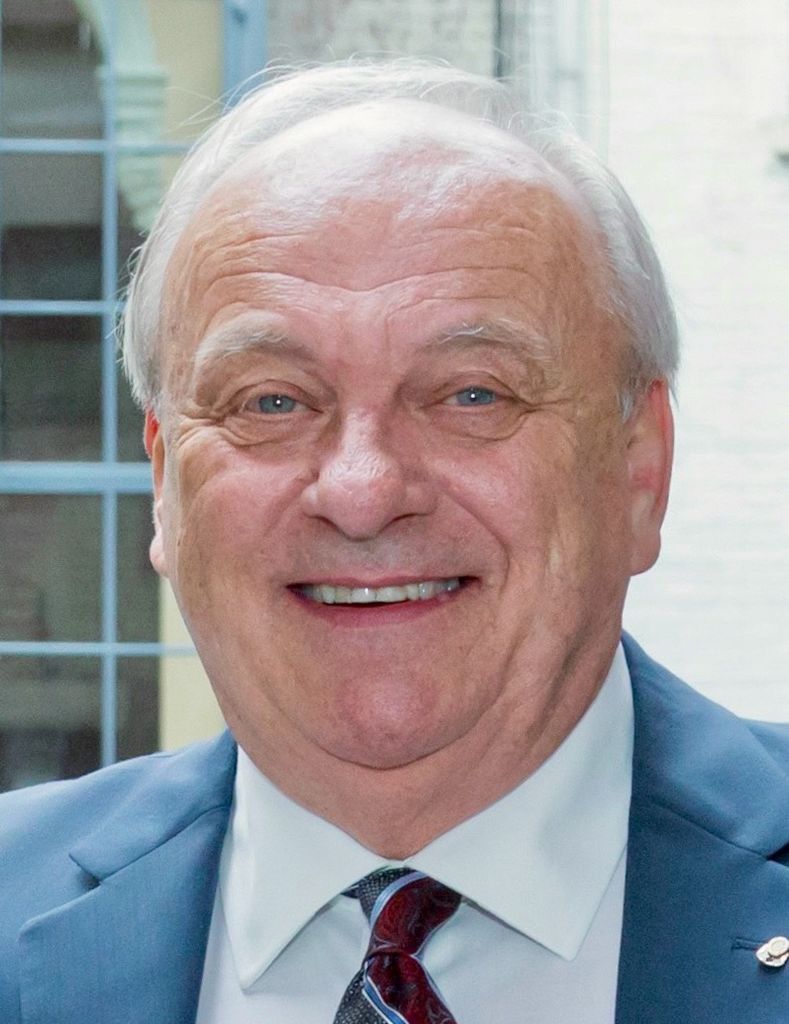
Dale S. Antanitus, MD, 72, of Carlisle, MA, passed away at home on January 30, 2022 after a 4-year battle with bladder cancer (initially doctors gave him only a few months!)
Dale Stanley Antanitus was born October 28, 1949 in LaSalle, Illinois, to parents Phyllis and Stanley Antanitus. From an early age he demonstrated a never-ending curiosity and interest in science. In grade school he carried out scientific experiments testing whether learned avoidance behavior in planarians could be transmitted via chemical compounds (RNA) to untrained planarians, as recent research had suggested. Collecting these flatworms in local streams, and training them to avoid an electric shock, he showed that no such transmission of learned traits occurred when new planarians consumed the chopped up trained planarians. At LaSalle-Peru Township High School he was inspired by a an excellent young biology teacher (Mr. Louis Borio) and a new advanced curriculum that emphasized the molecular basis of biology. He also excelled in math classes: one geometry class included a dramatically entertaining topological demonstration in which Dale, with considerable physical and mental effort, removed a vest without removing his overlaying sports jacket.
Dale learned to play the clarinet in grade school, excelled at it in the LP High School Symphonic Band (under the direction of Chris Izzo), becoming first-chair while the band won first place in a national competition, ultimately getting to play alongside Doc Severinsen. The happy memories and strong friendships developed in band and classes at LP High led to many lifelong friendships and informal as well as formal reunions up to a half-century later. At LP High he was very involved, in terms of both time and money, in the commissioning of an original sculpture by the renowned Baltimore sculptor Rodney Carroll, as a gift from his Class of 1967 for the new high school entrance. Although unfortunately he did not live to see the final installation, he obtained great satisfaction from the completed model and photos of the prepared site. He was proud to take part in this contemporary effort to extend the tradition of the many benefactors who have contributed to the unique physical and artistic beauty of LP High School.
Despite his excellence in academic subjects in high School, Dale enrolled at Ithaca College to study music. During his first semester one of his teachers told him that he could practice 100 hours a week and never get better, specifically "you have no musical talent". As it became clear to Dale that he was not destined for a musical career, he transferred to nearby Cornell University, where he took advantage of a wide variety of courses besides biological science, including Russian language and a course covering the Perceptron Theory of a young faculty member, Frank Rosenblatt, a pioneer in the field of AI who died in a tragic accident. Many years later Dale recalled that class as the one that stimulated his interest in understanding how the brain works, a problem to which he returned in his subsequent professional career.
After graduating from Cornell in 1971 Dale enrolled in the University of Rochester School of Medicine and Dentistry, obtaining his M.D. in 1975. During his time in Rochester, Dale conducted laboratory research as well as the more traditional medical training. The highly-cited research paper on glial cells in the brain he published in 1975 with his research advisor, Dr. Lowell Lapham, was to prove key to his later development of a theory of cortical neuron/astrocyte association that anticipated by decades findings from subsequent laboratory research efforts that are still ongoing.
After finishing his degrees and residencies, he used his specialization as a pediatric neurologist to aid in the management of a number of different psychiatric institutions. As an administrator he was highly sought after, and his first concern was always with the care and well-being of the patients in these institutions. Dale worked to see conditions improved for these people, who often had profound intellectual disabilities but whom Dale always viewed as full human beings entitled to the best care. These institutions included the historic Wrentham State School and Walter E. Fernald Developmental Center, which underwent many changes during the times he was associated with them. Working for the U.S. Department of Justice, he traveled extensively to Indiana and Pennsylvania to aid in the closing down of state mental hospitals. During this busy period in the middle of his career, he continually returned to his long-standing interest of understanding how the human brain works.
The result was an intense period of original thinking, drawing upon different sources. His previous experience in Lowell Lapham's University of Rochester laboratory led him to understand that astrocytic glial cells (astrocytes), rather than having static spatial relationships with surrounding neurons, actually were motile, and capable of altering such spatial relationships. His readings in the scientific literature supported the ability of groups of astrocytes to influence one another via waves of calcium concentrations passing through the gap junctions connecting one astrocyte from another. Finally, he was able to draw upon his extensive clinical observations and knowledge of different mental conditions and disorders, with epilepsy being an important one, to synthesize this wide range of materials in a much larger-scale and more ambitious theory than narrowly-focused neuroscience research typically pursues.
This synthesis was set out in a typewritten manuscript in the late 1980's that upended the universal view that the human brain processed its information solely through the electrical signals transmitted along pathways of neurons. (It is interesting to note that in a thousand-page textbook on the human brain from that time, only a single paragraph mentioned glial cells or astrocytes, solely as a supporting matrix for neurons.) Although this manuscript was freely shared with various scientific colleagues in a variety of disciplines, who recognized its novel insights, the entire work did not find a publisher, likely due to its unorthodox nature as a work of theoretical neuroscience synthesizing clinical observations, laboratory investigations of other researchers, and its proposal of a bold new way of understanding cortical brain function as highly-dependent upon astrocytic behavior. A much shorter version entitled "A Theory of Cortical Neuron-Astrocyte Interaction" appeared in the refereed journal The Neuroscientist. The unrevised manuscript of the larger book was also freely shared with the world by making it available on the website corticaltheory.com and antanitus.com. Research published in the 21st century from laboratories world-wide since this seminal theory was proposed have clearly established important roles for astrocytes in affecting the electrical signal processing carried out by neuron, via chemical and spatial organizational rather than purely electrical means.
He also took part in bodybuilding competitions, taught his son to ski on many trips to Vermont, served as a faculty member at Harvard Medical School, and became involved in politics through his donations to several candidates and causes, particularly marriage equality.
Dale is remembered fondly as a bon vivant, who embodied the 'work hard/play hard' life. Generous with his attention to everyone in his presence, liberal with his deep and learned appreciation of all the arts of cultured living, and a most gifted conversationalist who effortlessly contributed to hours of discussions ranging from the arts, sciences, politics, and the many ways we live. His dinner parties are legendary for his superb cooking and the astonishing array of fine table settings that he deployed, while making sure that no one was intimidated by the Caviar serving and special forks.
As a human being, Dale was effervescent, and continually interested in (and interesting to as well!) an extraordinarily broad spectrum of humankind. Dale was a discerning collector of the fine arts, his innate fine aesthetic sense being guided solely by what he liked and responded to personally, rather than any monetary considerations. To own a beautiful object made by human hands was a source of joy for him. He loved cooking for others, was a gourmand, and entertaining in an elegant style was one of the ways he showed his love for his friends. His refined appreciation of jewelry is a source of gratitude for friends around the world who were startled by the unexpected gift of a lovely treasure that will always remind us of his intent that all of us should be as fabulous as he was. Dale loved travel – especially the Mediterranean and the Caribbean. Possessing the enviable skill of being able to walk into a room of strangers and emerge a few hours later surrounded by close friends, he made many lifelong and frequent connections with fellow travelers.
His favorite work of music was Alan Hovhannes' Symphony #2, Mysterious Mountain. A critic wrote: "The real mystery of Mysterious Mountain is that it should be so simply, sweetly, innocently lovely in an age that has tried so terribly hard to avoid those impressions in music." This description could apply equally well to the Dale Stanley Antanitus beloved and remembered by his many friends.
Dale is predeceased by his parents, Stanley & Phyllis Antanitus, and his younger brother, Rear Admiral David Antanitus. He is survived by his son Eric, daughter-in-law Bonnie Jo, grandson Cooper (who misses his Papa), sister-in-law Betsy and nieces Alison, Emily & Rachel.
A memorial for Dale will be held at a later date.
In lieu of flowers, donations may be made to Dale's hometown newspaper, his beloved Carlisle Mosquito (www.carlislemosquito.org)
Arrangements are under the care of Dee Funeral Home & Cremation Service of Concord.
To send flowers or plant a memorial tree in memory, please visit our flower store.
Dale S. Antanitus, Md's Guestbook
Visits: 25
This site is protected by reCAPTCHA and the
Google Privacy Policy and Terms of Service apply.
Service map data © OpenStreetMap contributors